

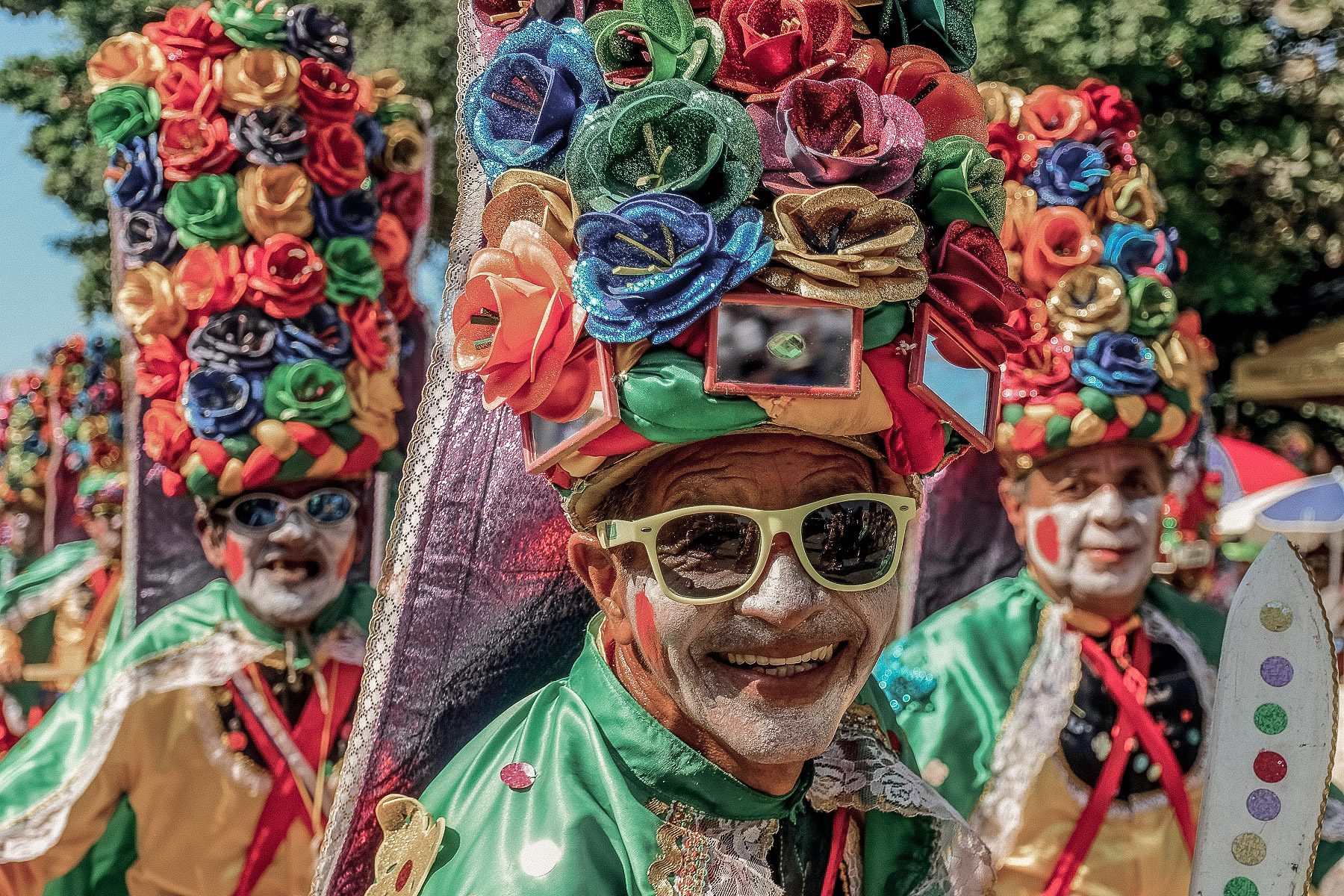
What happens when an entire city pauses everything, steps into the warm coastal streets, and surrenders to four days of collective joy and ancient rhythms? Ask anyone in Colombia, and they’ll answer with our favorite coastal saying: “Quien lo vive, es quien lo goza.” Those who live it are the ones who enjoy it. When I first experienced Barranquilla’s Carnival, I realized it was far more than just another street festival. It’s a living, breathing UNESCO World Heritage tradition where centuries of indigenous, African, and European influences converge in an explosion of cumbia drums, hand-carved masks, and vibrant Caribbean colors.
Mark your calendars: The 2027 Barranquilla Carnival runs from Saturday, February 6, to Tuesday, February 9 (always falling on the four days before Ash Wednesday). Getting the logistics right is essential to enjoying the trip safely and comfortably. This includes navigating tight hotel inventory and securing physical seats (palcos) along the Cumbiódromo on Vía 40. However, it’s understanding the human heartbeat behind the music that transforms a travel itinerary into an unforgettable memory. This is your complete guide to planning the logistics and stepping into the soul of Colombia’s greatest celebration.
The four days
| Date | Event | What happens |
|---|---|---|
| Sat, Feb 6 | Batalla de Flores | The opening parade, led by the Carnival Queen. Floats, comparsas, costumed groups, all down Vía 40. The longest day (around six hours). |
| Sun, Feb 7 | Gran Parada de Tradición y Folclor | No floats. Only traditional folkloric groups and dances. |
| Mon, Feb 8 | Gran Parada de Fantasía | Contemporary comparsas, orchestras, choreography that mixes tradition with invention. |
| Tue, Feb 9 | Muerte de Joselito Carnaval | The closing. A satirical mock funeral for Joselito, the character who personifies Carnival, mourned by “widows” in the street so the city can go back to normal. |
The parades typically begin around midday and continue into the late afternoon, though the music and street energy persist long after sunset.
Salwa Maloof Habib was named the 2027 Carnival Queen in August 2026. I loved the personal detail that accompanied the announcement: instead of the usual formal phone call, Barranquilla’s first lady drove over to Salwa’s home to share the news in person.
Salwa, who is 24 years old, holds a degree in international relations from IE in Madrid. She serves as director of the Clínica Internacional La Misericordia and as CEO of the Fundación Fulamic, which supports patients with complex medical conditions. She is also a UNICEF Goodwill Ambassador for migrant populations in Egypt. On top of all that, she’s a lifelong dancer who trained at Julie de Donado’s academy and performs with La Misma Vaina cumbiamba. In her words, cumbia is “the root, the soul, and the heart of Carnival.”
I mention her because she exemplifies how this festival operates. The Queen of Carnival isn’t an elite figure brought in to wave from a float; she’s a Barranquillera who dances in a cumbia group year-round, just like everyone else on the street. Organizers have confirmed that the 2027 edition will incorporate a strong solidarity component, providing direct support to regional communities rebuilding after this year’s earthquake.
Which day to pick
Here is some advice that most travel guides get wrong.
Saturday’s Batalla de Flores gets all the headlines, and it’s undeniably the biggest spectacle of the week. But it’s also the most crowded, the hottest, and by far the toughest logistically. Having experienced it many times, I advise you to go to the Saturday parade if you can, but don’t plan your trip as if the other three days are secondary.
Sunday’s Gran Parada de Tradición features folkloric troupes performing without massive floats, which brings you as close as possible to the authentic soul of Carnival. Monday’s Fantasía showcases artistic invention. Tuesday’s Muerte de Joselito is the funniest and most authentic experience, but almost no international travelers stay for it. All three days are less crowded, easier to navigate, and far more cost-effective.
So, if you have four days, stay for all four. If you have two days, pick Saturday and Sunday. If you only have one day and want to experience the authentic culture rather than just take a postcard photo, go on Sunday.

What you’re actually walking into
The number I keep coming back to is 80,000. That’s roughly how many hacedores take part every year: the dancers, the musicians, the women who sew the costumes, the people who build the masks. Around 845 folkloric groups. UNESCO declared it a Masterpiece of the Oral and Intangible Heritage of Humanity back in 2003, and that recognition matters, but the number is what explains the thing better.
Here’s why I think it’s worth saying out loud. Most big cultural events that visitors travel for are, at some level, produced for visitors. Carnival isn’t. Barranquilla organizes its entire calendar around this, the groups rehearse for months, families pass costumes down, and all of it would happen exactly the same if not a single foreigner showed up. You’re not the audience. You’re being let in.
That changes how you should plan the trip, and I’ll come back to it at the end.
The history is worth knowing too, because it’s legible in what passes in front of you. Barranquilla is a port city, which means it has always been a crossroads. What became Carnival fused the masked balls and floats the Spanish brought with the drumming traditions carried by enslaved Africans and the rituals of the Indigenous peoples of the coast. That’s not decoration on a party. It’s the actual content of the dances.
The characters and dances you’ll see
El Garabato is a dancer in black and yellow with a scythe, performing the fight between life and death. Mapalé carries the movement and the exhaustion of African fishermen. Cumbia, danced in circles holding candles, tells a story of courtship between African and Indigenous people under Spanish rule. And La Marimonda, the floppy-eared mask with the long nose that you’ll see everywhere, was invented by working-class barranquilleros to make fun of the city’s elite. It’s the most beloved character of all, which tells you something about the place.

How palco tickets work
A palco is a reserved seat in a grandstand along the route. It’s the difference between watching Carnival and standing behind eight rows of people for six hours in Caribbean heat.
Two routes matter. Vía 40 is the main corridor, where Batalla de Flores runs and where most of the grandstands are. Calle 84 has a parallel program, looser, more neighborhood, younger crowd. Which one you pick shapes your day more than most people expect.
Palcos are sold by official vendors and authorized resellers, and prices move depending on the day, where you are on the route, and whether the stand is covered. Saturday is the most expensive and the first to go.
Prices and availability for palcos in 2027 are starting to come through, and they change fast. Contact us now if you would like to book your Barranquilla Carnival tickets.
Carnival season starts in January
This is the part most guides leave out, and I think it’s the most underrated thing about the whole event.
The four official days are the peak, but the season opens weeks earlier. La Lectura del Bando is the proclamation by the Queen that formally opens everything. La Guacherna is a nighttime parade of lanterns, cumbia, and tambora that Esthercita Forero brought back in 1974, and for a lot of barranquilleros it’s the emotional center of the season, more than the big parades. Then there’s the coronation of the Queen and the Rey Momo.
If you have any flexibility on dates, come early. Arriving a few days before Carnival gets you the city assembling itself, which is quieter and honestly more revealing than the peak. It also opens up the coast: Cartagena and Santa Marta are both around two hours away, and the days before Carnival are the easiest time to see them. We build personalized itineraries around Carnival all the time, so tell us what you have in mind and we’ll shape the rest of the trip around those four days.

Where to stay in Barranquilla
Where you sleep decides how much of your Carnival you spend in traffic, so it’s not a minor decision.
El Prado is the historic district, with the city’s architecture and walking distance to Vía 40. Alto Prado is central and residential, and where most of the international-standard hotels are. Villa Country is restaurants and nightlife, popular with Colombians who come in for Carnival.
All three sell out months ahead and rates climb as Carnival gets closer. If you’d like us to handle the hotel, get in touch as early as you can. Availability only shrinks from here.
Getting to Barranquilla
By air: Ernesto Cortissoz International Airport (BAQ), with direct connections from Bogotá, Medellín, and several international routes.
By road: Barranquilla sits between Cartagena and Santa Marta, roughly two hours from each. That’s why most people build Carnival into a wider coastal trip. Four days of parades is a lot on its own, and the coast gives you somewhere to land afterward.
Is Barranquilla Carnival safe?
Yes, and I want to answer this properly rather than defensively, because I know it’s the question a lot of people are actually typing.
Carnival is a family event. Barranquilleros of every age are in the street, grandmothers and toddlers included, and the parade zones have heavy police and organizer presence. The risks are the ordinary ones for any large crowd anywhere: pickpocketing, dehydration, losing your group. Carry only what you need, agree on a meeting point, drink more water than you think you need, and have your transport arranged before the streets close rather than trying to find a ride once they have.
If you want the wider picture on traveling in Colombia, we wrote about that separately: Is Colombia Safe to Travel?
What to wear and bring
February in Barranquilla is hot and humid. Light clothes, a hat, sunscreen, shoes you can stand in for hours.
Most people wear Carnival colors (yellow, red, blue, green) or pick up a sombrero vueltiao or a Marimonda mask from a street vendor. Bring cash in small bills. Foam spray and cornstarch fly around freely, so don’t wear anything you’d mind having covered.

How we do Carnival at Impulse
Palcos and private transport are the baseline. Any decent operator can arrange both, and if someone is selling you those two things as the differentiator, they’re selling you logistics.
What actually changes the experience is who’s sitting next to you. Our guides in Barranquilla are barranquilleros, and some have danced in the parades themselves. So when a comparsa passes, you find out which group it is, which neighborhood it comes from, and what the costume is saying. Not a general explanation of Colombian folklore. The specific thing in front of you.
The logistics we handle so you don’t have to think about them: palcos on the route that fits how you want to watch, a hotel positioned so you’re not stuck in closed streets, private transport that works around the route, and a plan for each day built around when parades actually start rather than when the program says they will.
And if you ask us, we can put you with the hacedores themselves. The dancers, the women who sew the costumes, the people who run the dance schools that feed the parades year after year and keep all of this alive between Februaries. It isn’t part of every trip by default, so say so if you want it. That’s the part I care most about, because it’s the difference between watching Carnival and understanding why an entire city organizes its year around it.
When to book Barranquilla Carnival 2027
Hotel rooms and palcos are both capacity-limited, and Barranquilla has the inventory it has. People who book in September or October get a real choice of hotels and seats. People who wait until December choose from what’s left.
If you’re thinking about adding Cartagena or Santa Marta on either side, decide that now. It’s much easier to design a coastal trip around Carnival than to attach one afterward.
So, what happens when an entire city surrenders to four days of rhythm and joy?
You realize that Carnival isn’t just a spectator sport; it’s a celebration that invites you to join the local dancers under the warm Caribbean sun, moving to the beat of the tamboras. Beyond the grandstands, parades, and reservations, you walk away with a genuine connection to the people and heritage that make Colombia extraordinary.
The celebration is waiting for you. Contact us to book your Barranquilla carnaval entrance!
Frequently asked questions
When is Barranquilla Carnival 2027?
February 6 to 9, 2027. Saturday through Tuesday, ending the day before Ash Wednesday.
How long does it last?
Four official days. The wider season, with the pre-Carnival events, starts in January.
What are the four main parades?
Batalla de Flores (Saturday), Gran Parada de Tradición y Folclor (Sunday), Gran Parada de Fantasía (Monday), and Muerte de Joselito Carnaval (Tuesday).
Do I need a palco ticket?
Not strictly. But the parades run several hours in strong heat and the free viewing areas fill up early, so a seat is what makes a full day comfortable.
Which day should I pick if I only have one?
Sunday. Gran Parada de Tradición is less crowded, easier to get around, and closer to what Carnival actually is. Saturday’s Batalla de Flores is the biggest parade, but it’s also the hottest and the most packed. If you can stay longer, all four days are worth it and the last three are far more comfortable.
How far is Barranquilla from Cartagena?
About two hours by road, which makes combining the two easy.
Is it family-friendly?
Yes. It’s a family celebration for the city, and grandstand seating makes it manageable with kids.


