

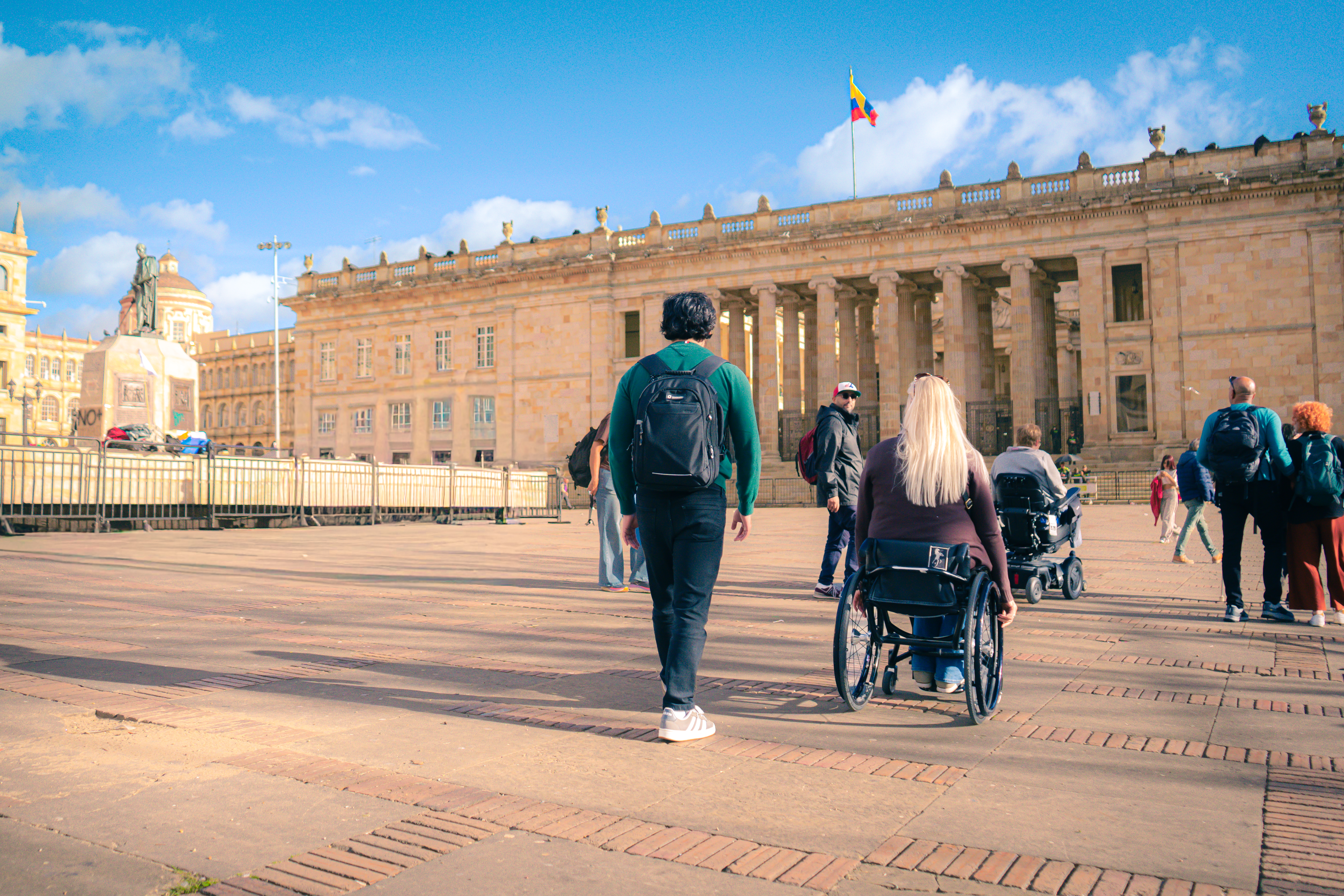
Colombia. The land of magical realism, vibrant cities, and lush landscapes. But a question lingers in the minds of many travelers: is Colombia safe to travel in 2026?
For years, Colombia battled a reputation shaped by its past. Images of conflict and unrest painted a picture that kept plenty of curious travelers away. The truth is more interesting than the old headlines: Colombia closed 2025 with more than 10 million international arrivals and departures (its busiest year on record), and tourism revenue passed USD 21.6 billion, more than coffee, coal, or oil brought in combined. Today, it’s a country on the rise, and Bogotá, Medellín, Cartagena, and the Coffee Region keep filling up with travelers who arrived cautious and left already planning the next trip back.
That doesn’t mean the whole country is open for a casual weekend getaway. A handful of specific areas carry real, documented risk right now, and knowing exactly where those lines are drawn matters more than the vague version that tends to circulate online. So let’s answer the actual question, with the full picture: is Colombia safe to travel in 2026, and what does “safe” really cover here?
What the Current Travel Advisory Actually Covers
As of March 2026, the U.S. State Department has Colombia at Level 3 (“Reconsider Travel”), citing four factors: crime, terrorism, civil unrest, and kidnapping (the advisory also flags natural disaster risk in specific regions). It’s a real advisory, and we’re not going to soften it or pretend it doesn’t exist.
What it does flag: specific interior and border areas, including parts of Cauca and Valle del Cauca outside their main cities (Popayán and Cali), the department of Arauca, Norte de Santander, and the strip within 10 kilometers of the Colombia-Venezuela border. These sit outside the routes nearly every traveler follows, from Bogotá and Medellín to Cartagena and the Coffee Region. If you’re curious about a specific region we haven’t covered here, just ask us before booking anything independent in that area.
What the advisory doesn’t touch: Bogotá, Medellín, Cartagena, Santa Marta, the Coffee Region, San Andrés, Popayán itself, and Cali’s city center (the corridor nearly every international traveler actually visits). In 2025, San Andrés saw visitor numbers climb 40%, Cúcuta 37%, Santa Marta 20%. People aren’t avoiding Colombia. They’re arriving in record numbers, to real places, and going home with stories worth repeating.
A Level 3 advisory sounds more dramatic out of context than it is in practice. Several popular destinations worldwide carry the same rating. What matters for your trip is the specific geography, not the headline number.
There’s No Anti-American Sentiment in Colombia
Colombians are quick to help, quicker to laugh, and genuinely invested in how your trip goes. Ask anyone who’s traveled here. That hasn’t changed, and it isn’t tied to whatever’s happening in Washington or Bogotá politically. The United States remains Colombia’s single largest source of international visitors, accounting for roughly a quarter of all arrivals in 2025. Colombians know this, and the welcome reflects it: curiosity about where you’re from, patience with your Spanish, an invitation to sit down and eat before you’ve even finished asking for directions. Whatever headlines cross your feed, the reception on the ground stays exactly the same.
This matters beyond good manners. It’s the difference between a country that tolerates tourism and one that’s genuinely built around welcoming people in, and it shows in the small interactions that make or break a trip: a taxi driver who double checks you got to the right address, a shop owner who throws in something extra because you asked about her city with real interest.
Safety in Colombia’s Cities
Bogotá pulled in 1.9 million international visitors in 2025. Medellín grew 9.3% to 1.18 million. Part of that growth comes down to real, visible investment: dedicated tourism police units, better-lit streets in the areas travelers actually walk, and infrastructure upgrades that didn’t exist a decade ago. And part of it comes down to timing. Bogotá turns into a stage every March for Festival Estéreo Picnic, three days in Parque Simón Bolívar that pull in international headliners alongside Colombian acts. Cartagena’s walled city hosts FICCI every April, Latin America’s oldest film festival, now in its 65th edition. Medellín’s Feria de las Flores fills the streets with silleteros and flower displays every August, and Barranquilla’s Carnaval (UNESCO-recognized, one of the biggest in the world after Rio) draws travelers who plan their whole year around four days in February.
These aren’t backdrop events. They’re reasons people build entire trips around one specific week, and festivals that pull in hundreds of thousands of visitors don’t happen without serious security planning behind them.
Neither city is naive about crime, and neither should you be. Practicing good Colombia travel safety here looks the same as it would in Mexico City, São Paulo, or any major capital you’d visit in 2026:
- Use Cabify, Uber, or a taxi booked through your hotel rather than hailing one on the street.
- Keep valuables out of sight, especially your phone while walking, and don’t display expensive jewelry or electronics unnecessarily.
- Ask your accommodation which specific blocks to skip after dark. Safety varies street by street here, not neighborhood by neighborhood, so a general “avoid this area” warning is almost always too broad to be useful.
- Carry a photocopy of your passport for daily errands, and leave the original secured at your hotel.
- Learn a handful of basic Spanish phrases. It smooths over more situations than you’d expect, from asking directions to explaining you’re lost.
None of this is Colombia specific caution. It’s city-in-2026 caution, applied to a place that happens to reward the travelers who show up curious rather than defensive.
Safety in Rural Areas and Tourist Destinations: Safe Travel Tips Colombia
The momentum isn’t limited to the big three cities. San Andrés is having its best tourism years in memory. Santa Marta and Tayrona keep pulling travelers toward the coast, and the Coffee Region and the Amazon remain firmly outside any advisory zone, welcoming visitors who want a slower, closer look at how Colombia actually lives day to day.
If you’re heading somewhere less traveled, whether that’s Caño Cristales, La Guajira, or the Tatacoa Desert, the same logic that shapes our own itineraries applies:
- Travel with a local operator who works that specific region regularly. Someone with standing relationships on the ground catches problems before they become your problems.
- Respect the environment and the communities you’re visiting. Responsible tourism practices aren’t a suggestion here; they’re how these places stay worth visiting.
- Stay connected. A local SIM card covers most of the country, but a satellite communicator is worth the extra weight in genuinely remote areas.
- Share your route with someone before you go, and treat travel to a less-visited area like the real adventure it is: with preparation, not improvisation.
So, Is Colombia Safe to Travel in 2026?
Yes, for the Colombia that ten million travelers visited last year. No, not for the handful of specific interior and border areas that were never part of anyone’s itinerary to begin with. The honest answer to “is Colombia safe to travel” sits in that distinction, not in a headline written for clicks rather than clarity.
Knowing exactly where that line runs, and building a trip that never needs to cross it, is what we do for a living. If you’re ready to see the Colombia that keeps people coming back, let’s start planning.

Frequently Asked Questions
Is Colombia safe for solo travelers in 2026?
Yes. Solo travel is common in Bogotá, Medellín, and Cartagena, and the same city precautions apply (registered transport, awareness of surroundings, avoiding poorly lit streets alone at night). Solo travelers tend to have an easier time connecting with locals than groups do, which often makes the trip feel safer, not riskier.
What areas of Colombia should tourists avoid?
The U.S. State Department’s Level 3 advisory specifically flags Arauca, Cauca (outside Popayán), Valle del Cauca (outside Cali), Norte de Santander, and the area within 10 kilometers of the Venezuela border. Bogotá, Medellín, Cartagena, Santa Marta, the Coffee Region, San Andrés, and Popayán itself fall outside these zones.
Is Bogotá safe at night?
Central, well-trafficked areas like Zona Rosa, Zona G, and Usaquén are generally safe with normal precautions. As in any major capital, avoid walking alone through unfamiliar or poorly lit streets late at night, and use a registered ride-hailing app instead of hailing a taxi off the street.
Do I need travel insurance for Colombia?
It isn’t legally required, but we recommend it for every trip, mainly for medical coverage and trip interruption, not because Colombia carries unusual risk compared to other Latin American destinations.
Is the Colombian Coffee Region safe to visit?
Yes. The Coffee Region falls entirely outside the current advisory’s restricted zones and welcomes a steady, growing flow of international visitors drawn by coffee farm tours, hiking, and boutique countryside stays.
What is the current US travel advisory level for Colombia?
Level 3, “Reconsider Travel,” issued March 31, 2026, citing crime, terrorism, civil unrest, and kidnapping, with specific “Do Not Travel” designations limited to a handful of interior departments and the Venezuela border strip.


One Comment